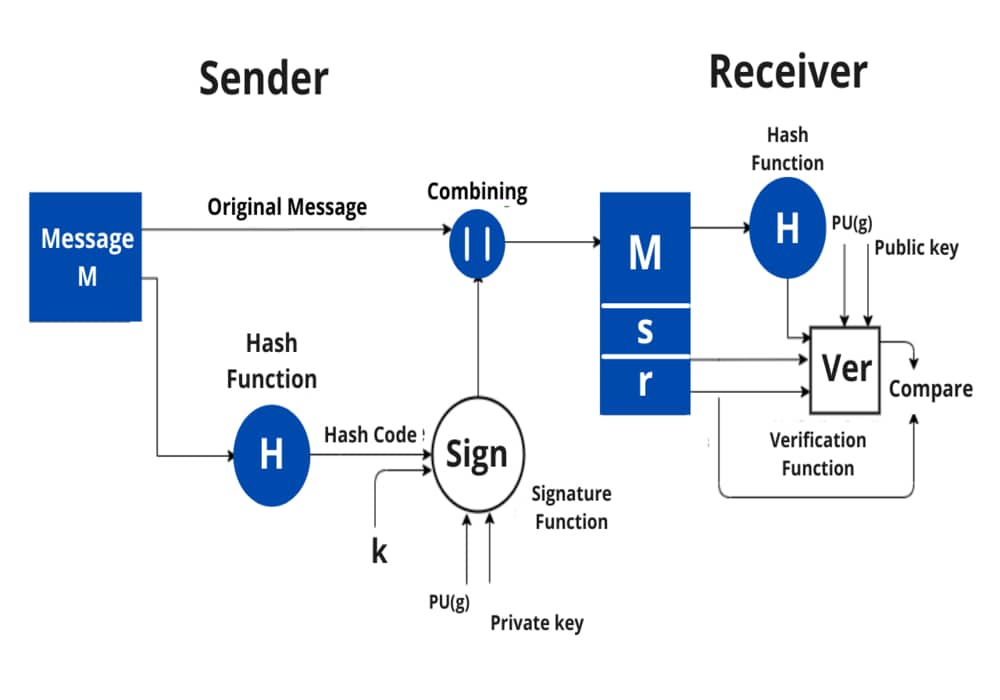
FAQs on Digital Signature in Network Security
1. What is the main purpose of a digital signature in network security?
The main purpose is to ensure data integrity, authenticity, and non-repudiation of digital communications and documents.
2. How does a digital signature protect against hacking?
It uses encryption and key-based verification, preventing attackers from altering or faking messages or files during transmission.
3. Is a digital signature the same as encryption?
No. Encryption protects data privacy, while digital signatures verify authenticity and integrity of data.
4. What are the common algorithms used for digital signatures?
RSA, DSA, and ECDSA are the most commonly used digital signature algorithms in computer network security.
5. Why is non-repudiation important in network security?
It prevents the sender from denying that they sent a particular message, ensuring accountability and trust.
Conclusion
Digital signatures are the backbone of modern computer network security.
They guarantee that communications and data remain authentic, secure, and verifiable.
For businesses, developers, and users, implementing digital signatures ensures compliance, trust, and protection in every digital interaction.